
Fluoride Water Filter: How to Remove Fluoride From Your Australian Drinking Water
Fluoride in Australian tap water is one of the most debated water quality topics in the country. Community water fluoridation has been standard practice across most Australian capital cities and regional centres for decades, with water supplies being supplemented at low concentrations to protect against tooth decay. For many Australians, this is an accepted part of public health infrastructure. For others, it is a compound they would prefer not to consume, and they are actively looking for a reliable fluoride water filter to address it.
This page is for those households. We explain what fluoride does in your tap water, what the research says, and, most importantly, which water filtration system approaches actually work to remove it. Because not all water filters address fluoride and choosing the wrong filter system means continuing to consume fluoride while believing it has been removed.
Why Is Fluoride Added to Australian Water Supplies
The practice of community water fluoridation began in Australia in the 1960s and 1970s, based on research showing that low levels of fluoride intake could reduce tooth decay in children and adults. The World Health Organisation and the National Health and Medical Research Council (NHMRC) both recognise community water fluoridation as an effective and safe public health measure to prevent tooth decay at a population level.
Australia’s municipal water supplies are typically fluoridated at concentrations between 0.6 and 1.1 milligrams per litre, consistent with the range the World Health Organisation identifies as optimal to reduce tooth decay without exceeding safety thresholds. The Australian Drinking Water Guidelines set a maximum of 1.5 milligrams per litre based on the available evidence that fluoride at higher concentrations can contribute to dental fluorosis and, at very high levels, skeletal fluorosis.
Better Water Starts Here
The Case for Fluoride Removal: Why Households Choose to Filter It Out
For households that prefer not to consume fluoride, the reasons are personal and varied. Some parents prefer to carefully manage their infant’s fluoride exposure, given that formula-fed babies who consume fluoridated tap water receive a proportionally higher dose per body weight than older children or adults. Some individuals with thyroid conditions or other health considerations prefer to minimise their fluoride intake. And some households simply prefer to choose what is and is not in their water as a matter of personal sovereignty, regardless of the evidence that fluoride at regulated concentrations is safe and effective for the general population.
The debate about fluoridation is ongoing in Australia, with evidence that fluoride at optimal concentrations benefits dental health at a population level balanced against concerns from some researchers and consumer groups about long-term systemic effects. At Armour Water, we respect every household’s right to make an informed choice about their own water. We present the information fairly and provide fluoride filtration solutions that allow any household to make that choice effectively.
Which Water Filters Actually Remove Fluoride?
What Standard Carbon Filters Cannot Do
The most important thing to understand when choosing a fluoride water filter is that a standard carbon filter does not remove fluoride. Activated carbon works through adsorption, which is highly effective for chlorine, taste and odour compounds, VOCs, and some heavy metals. Fluoride is a dissolved ionic compound that does not adsorb onto carbon media. Households using a standard carbon filter as their only filtration stage are not reducing their fluoride intake at all, regardless of what the packaging may imply about general water quality improvement.
For genuine fluoride filtration, you need one of three technologies: reverse osmosis, activated alumina, or bone char. This section covers understanding what is right for your household and your water filtration system setup.
Reverse Osmosis: The Most Comprehensive Fluoride Removal Solution
Reverse osmosis is the most reliable and widely available technology for fluoride removal in Australian residential homes. Quality reverse osmosis systems remove fluoride at rates of 90 to 96 per cent through a semi-permeable membrane that physically blocks fluoride ions at the molecular level. This makes reverse osmosis systems the recommended choice for any household that wants consistent, verified fluoride filtration alongside the removal of a comprehensive range of other dissolved contaminants, including heavy metals, nitrates, PFAS chemicals, and pharmaceutical residues.
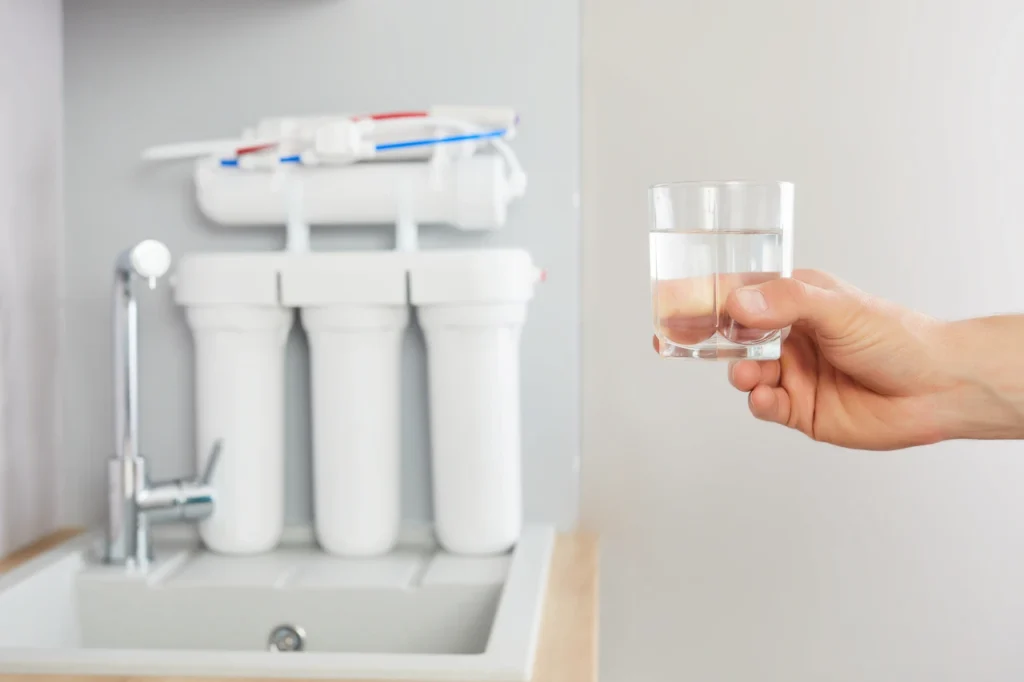
An under-sink reverse osmosis system setup typically includes a sediment pre-filter, a carbon pre-filter to protect the membrane from chlorine damage, the RO membrane, and a post-carbon polishing stage. The combined system addresses taste and odour improvement, sediment removal, and comprehensive dissolved contaminant reduction, including fluoride, in a single integrated water filtration system. This is why RO is the most popular choice among Australian households wanting to manage their fluoride intake while also achieving the highest overall standard of drinking water purity.
Activated Alumina Fluoride Filter Cartridges
Activated alumina is a porous form of aluminium oxide specifically effective at adsorbing fluoride from water. An activated alumina filter cartridge can be used as a standalone fluoride-reduction stage or as part of a multi-stage under-sink filter system. When properly sized and maintained, activated alumina filter cartridge media can reduce fluoride by 80 to 90 per cent, which is highly effective for households on mains water supplies at the standard Australian fluoridation concentration of 0.6 to 1.1 milligrams per litre.
The limitation of activated alumina is that its effectiveness is pH-dependent and declines over time as the media becomes saturated with fluoride and other dissolved ions. Regular filter cartridge replacement is essential to maintain performance. Activated alumina also does not address the broader range of dissolved contaminants that reverse osmosis removes, so for households wanting comprehensive water filtration protection, it is often combined with a carbon stage for taste and odour improvement, alongside the fluoride reduction stage.
Bone Char: The Traditional Natural Option
Bone char is a carbon material derived from animal bones that has historically been used to remove fluoride from water supplies. It combines the carbon adsorption properties of activated carbon with a hydroxyapatite structure that specifically adsorbs fluoride. Bone char reduces fluoride effectively and addresses some heavy metals and chlorine, making it a multi-purpose natural filtration media.
Bone char is available in filter housings compatible with standard under-sink filter system setups and is preferred by some households for its natural origin. Its fluoride removal efficiency is generally somewhat lower than that of activated alumina or RO, and it requires regular filter cartridge replacement to maintain performance. For households that prefer naturally sourced filtration media and want a straightforward fluoride filtration option that also reduces fluoride while improving taste and odour, bone char is a legitimate, safe and effective choice.
Choosing the Right Fluoride Water Filter for Your Australian Home
For most Australian households wanting to remove fluoride from their drinking water, we recommend an under-sink reverse osmosis system as the most reliable, comprehensive, and long-term solution. The fluoride removal rate is consistently high, the system addresses a wide range of other contaminants simultaneously, and the ongoing maintenance cost is modest and predictable.
For households where a full RO system is not feasible, such as in rental properties or where under-sink space is limited, a quality activated alumina filter cartridge stage added to an existing multi-stage filter system is a practical alternative that reduces fluoride to significantly lower levels. Paired with a carbon filter stage for taste and odour improvement and sediment pre-filtration, this combination delivers meaningful fluoride filtration without the complexity of an RO installation.
Whatever your household’s specific needs and preferences, the Armour Water team will help you understand your options and select a water filter solution that is genuinely right for you. We do not take sides in the fluoridation debate. We respect your right to choose what is in your household’s drinking water, and we provide the water filtration system expertise and products to help you act on that choice reliably and cost-effectively. Contact us today for a free consultation.
Frequently Asked Questions About Fluoride Water Filters
No. A standard carbon filter, whether in a pitcher, benchtop unit, or under-sink system, does not remove fluoride from tap water. Activated carbon filtration works through adsorption, which is highly effective for chlorine, taste and odour compounds, VOCs, and some heavy metals, but fluoride is a dissolved ionic compound that does not bond to carbon media. If you are using a standard water filter pitcher or a basic under-sink carbon system and assuming your fluoride intake is being reduced, it is not.
Effective fluoride filtration requires either a reverse osmosis membrane, an activated alumina filter cartridge, or bone char media. These are fundamentally different technologies from standard carbon filtration and are specifically designed for the ionic removal required by fluoride. When purchasing a filter system marketed for fluoride removal, always verify that it includes one of these specific technologies and carries NSF certification for fluoride reduction. A system certified to NSF Standard 58 (for reverse osmosis) or NSF Standard 53 (for specific contaminant reduction, including fluoride) has been independently tested to confirm its safe and effective fluoride removal performance. Our team at Armour Water can confirm which systems in our range are certified for fluoride removal for your specific water supply conditions.
Reverse osmosis is the most consistently effective residential technology for fluoride removal, achieving reduction rates of 90 to 96 per cent in well-maintained systems. The RO membrane's semi-permeable structure physically blocks fluoride ions at the molecular level, preventing them from passing into the product water. This level of fluoride filtration reduces fluoride from typical Australian fluoridation concentrations of 0.6 to 1.1 milligrams per litre down to levels well below 0.1 milligrams per litre in a properly functioning system.
The key factors that determine RO fluoride removal performance are membrane quality and age, incoming water pressure, and the condition of pre-filter stages. A worn or degraded RO membrane or inadequate incoming pressure will reduce the fluoride rejection rate. This is why maintaining your reverse osmosis systems on schedule, including annual pre-filter cartridge replacement and membrane replacement every two to three years, is essential to ensure the system continues to reduce tooth decay risk at the household level for health-conscious families. Water filtration system performance should always be verified with a TDS reading before and after the membrane to confirm ongoing reduction efficiency. Our Armour Water team provides this testing as part of every installation handover.
Yes. Choosing to remove fluoride from your household drinking water is a safe personal decision and does not in itself create any health risk. The World Health Organisation and Australian health authorities support community water fluoridation as a safe and effective measure to prevent tooth decay at a population level, but the evidence base for fluoridation focuses on population-level benefits, not on individual risk from choosing not to consume it.
Households that remove fluoride from their drinking water using a quality reverse osmosis system or other certified fluoride filtration system do not lose access to fluoride entirely. Fluoride is present in many foods, dental products, including toothpaste and professional treatments, and in some bottled mineral waters. The World Health Organisation acknowledges that diet and dental hygiene practices can manage tooth decay effectively without reliance on community water fluoridation. For households concerned about specific health problems or wanting to manage their fluoride exposure, removing it from drinking water through a certified water filter system is a reasonable and well-supported choice.
The lifespan of a fluoride-specific filter cartridge depends on the filtration media type, the fluoride concentration in your incoming water supplies, and your household's daily water consumption. Activated alumina filter cartridge media typically needs replacement every six to twelve months for a standard household on Australian mains water supplies, fluoridated at the standard 0.6 to 1.1 milligrams per litre range. Higher fluoride concentrations, such as those sometimes found in bore water in certain geological zones, will exhaust the media faster and require more frequent cartridge changes.
For reverse osmosis systems, the pre-filter stages that protect the membrane are replaced annually, and the RO membrane that does the primary fluoride filtration work typically lasts two to three years under normal household usage. Post-carbon polishing stages are also replaced annually. Staying on the recommended replacement schedule is essential to maintaining the fluoride-reduction performance of your filter system. A neglected filter cartridge that has exceeded its rated capacity will no longer reduce fluoride effectively, giving a false sense of security. Armour Water provides service reminders for every system we install so your water filtration system never falls behind.
This is the central question in the fluoridation debate, and the honest answer is that the evidence is nuanced. The World Health Organisation, the Australian Drinking Water Guidelines, and mainstream health authorities conclude that fluoride in drinking water at the concentrations used in Australian community water fluoridation programs is safe and effective and primarily associated with reduced tooth decay rates. There is strong epidemiological evidence that fluoride at concentrations of 0.6 to 1.1 milligrams per litre prevents tooth decay without producing adverse effects in the general population.
However, there is also a body of research examining potential health effects associated with higher fluoride exposure. Dental fluorosis, which causes mottling or spotting of tooth enamel, is associated with excess fluoride intake during tooth development. Skeletal fluorosis, a more serious condition affecting bone density, occurs at very high levels far above the concentrations in Australian water supplies. Some researchers have raised questions about potential effects on thyroid function and neurodevelopment at lower concentrations, though these findings remain contested in the mainstream scientific literature.
For households who prefer to avoid fluoride for personal health reasons, installing a certified fluoride filtration system is entirely reasonable and well-supported. Understanding the evidence that fluoride at standard levels is considered safe by major health authorities, while also respecting individual preferences for additive-free water, is the balanced position we maintain at Armour Water. Contact our team to discuss your specific water filter needs.