
Bacteria and Microorganisms
Concerned about bacteria and microorganisms in your water? Our advanced water filtration systems target harmful microbes and help protect your family with cleaner, safer water. Get reliable protection and peace of mind with proven filtration solutions designed for your home.
Bacteria and Microorganisms in Water: How UV Treatment and Filtration Protect Your Australian Home
When we think about problems with household water, taste, odour, and visible sediment are usually the first that come to mind. But the most serious water quality risks in many Australian homes are entirely invisible: bacteria, viruses, protozoa, and other microorganisms that can cause illness without any detectable sign in the water’s appearance or smell.
For households on bore water, rainwater tanks, or any non mains water supplies, microbiological safety is a genuine and ongoing responsibility. And even for households on treated mains supply, certain situations, including boil water alerts, post flood events, and ageing infrastructure, can create temporary microbiological risk that standard filtration alone does not address.
This guide covers the microbiological risks in Australian water, how UV disinfection and other treatment methods work, and how to select the right water treatment system to protect your household from pathogen contamination.
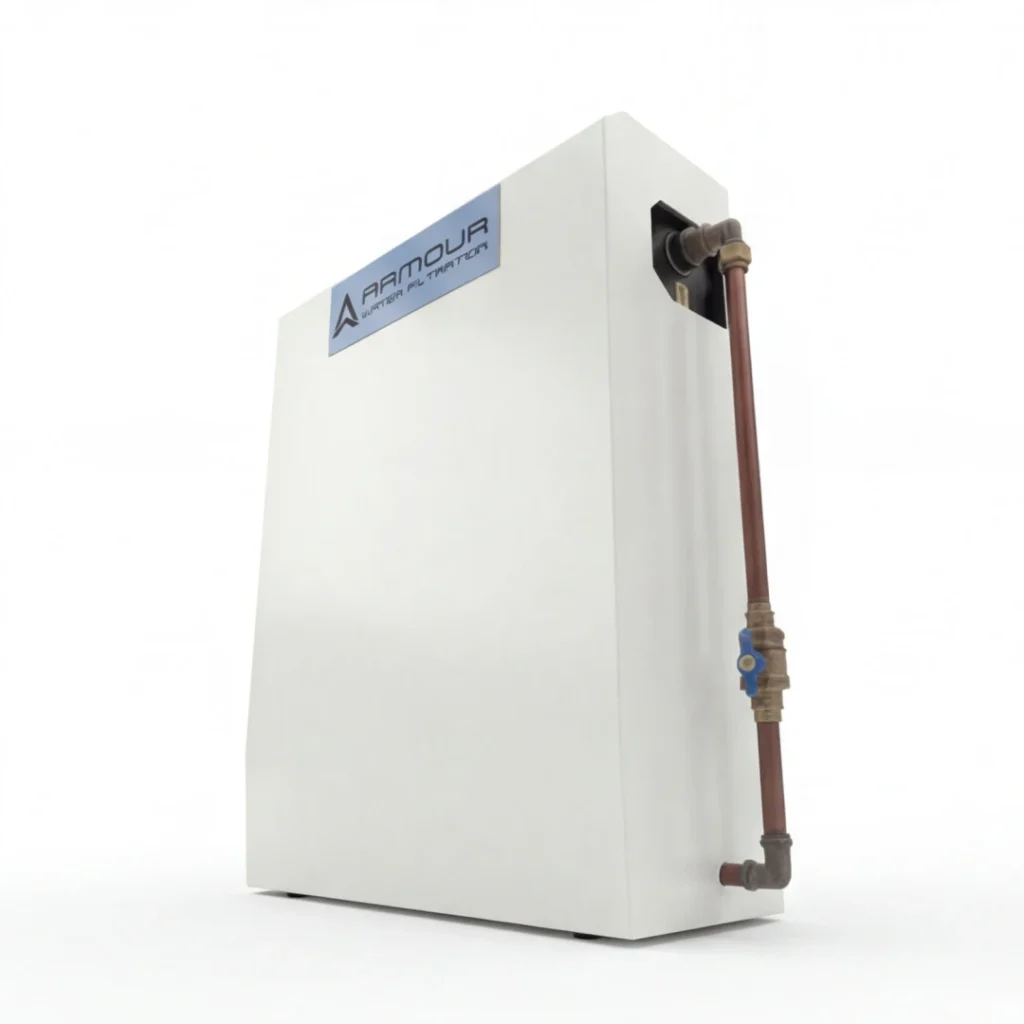
UV Disinfection: How It Works and Why It Is the Best Choice for Microbiological Treatment
Ultraviolet disinfection is the most effective, chemical free method for inactivating bacteria, viruses, and protozoa in household water supplies. UV light at 254 nanometres damages the DNA of microorganisms, preventing them from reproducing and rendering them harmless. Unlike chlorine disinfection, UV disinfection leaves no chemical residue, does not affect taste or odour, and does not form disinfection byproducts (DBPs), which are a concern with chemical treatment methods.
A UV water purification unit installed in your home’s water treatment system exposes every litre of water passing through to a precisely calibrated dose of UV light delivered by a germicidal lamp. The effectiveness of UV treatment in removing or inactivating pathogens at the correct dose is 99.99 per cent or higher for bacteria and protozoa, and very high for most viruses. This level of light disinfection is equivalent to or exceeds the microbiological protection provided by chemical disinfection at typical municipal dosing levels, without the associated chemical concerns.
It is important to note that UV systems are only effective on clear water. Turbidity, iron, tannins, or any particles that absorb or scatter ultraviolet light in the water pathway significantly reduce the effectiveness of removing pathogens. This is why UV treatment should always be installed as the final stage of a multi stage water filtration system that includes sediment and carbon pre filtration upstream. In bore water applications, particularly, pre treatment to remove iron and sediment is essential before the water reaches the UV systems stage.
Common Microbiological Contaminants in Australian Water
Bacteria: E. Coli and Coliforms
Bacterial contamination is the most common microbiological concern in Australian non mains water supplies. E. coli and total coliforms are the primary indicator organisms used in water quality testing. Their presence in a water sample indicates faecal contamination and signals that other harmful pathogens may also be present. E. coli contamination in drinking water causes gastroenteritis, severe diarrhoea, and in vulnerable individuals, serious complications. Bore water in agricultural areas, rainwater tanks with damaged or dirty roofs, and water bodies near livestock are common sources of contamination.
Protozoa: Giardia & Cryptosporidium
Giardia and Cryptosporidium are protozoan parasites that form robust cysts capable of surviving in water bodies and raw water sources for extended periods. Cryptosporidium is highly resistant to chlorine disinfection at the concentrations used in municipal treatment, which is why filtration is an essential component of any comprehensive water filtration system targeting protozoan risk. Both parasites cause gastrointestinal illness that can be prolonged and serious, particularly in children, the elderly, and immunocompromised individuals. Rainwater tanks on Australian properties are known to pose a risk of protozoan contamination.
Viruses
Enteric viruses, including hepatitis A, norovirus, and rotavirus, can contaminate untreated water supplies and cause severe gastrointestinal illness. Viruses are significantly smaller than bacteria and protozoan cysts, which means standard sediment and even some carbon filter systems do not capture them. Effective virus removal or inactivation requires either UV disinfection, reverse osmosis, or chemical treatment. In Australian bore water and tank water settings, viral risk is lower than bacterial and protozoan risk, but cannot be ignored for households using these sources for drinking water.
Choosing the Right Water Filtration System for Microbiological Protection
UV Systems for Tank and Bore Water
For households drawing from rainwater tanks or bore water, a UV water treatment unit is the most practical and reliable microbiological safety solution. Our water filter systems for tank and bore applications combine a sediment pre filter stage to remove particles, an activated carbon stage to address taste and odour, and a UV lamp as the final disinfection stage. This complete water treatment system sequence addresses physical, chemical, and biological water quality concerns in a single integrated setup.
UV lamp replacement is required annually, as the lamp’s germicidal output declines over time, even if the lamp still appears to glow. Our service reminder program ensures your lamp is replaced on schedule, so your light disinfection stage always delivers its rated effectiveness in removing pathogens from your household water.
Clean and Great-Tasting Drinking Water
Filtered water removes chlorine taste and chemical odours, providing fresher drinking water from every tap in your home.
Better Skin, Hair, and Shower Experience
Reducing chlorine exposure can help water feel gentler on skin and hair, improving everyday shower comfort.
Appliance Protection and Scale Reduction
Filtration helps reduce mineral buildup that can affect dishwashers, washing machines, hot water systems, and other appliances.
Peace of Mind for the Whole Household
Enjoy the confidence of knowing your water supply is treated before reaching every tap throughout your home.
What Water Filters Remove and What They Do Not
Understanding what water filters remove and what they cannot is important when designing a microbiologically safe water filtration system. Standard carbon block and sediment filters are not designed to remove pathogens. They improve taste and odour and capture physical particles, but they do not provide reliable microbiological protection on their own.
A water filter with a rating of 0.1 to 0.2 microns can capture some protozoan cysts through physical size exclusion. However, for comprehensive microbiological protection, including the removal or inactivation of bacteria and viruses, UV disinfection or reverse osmosis is required. Water filters remove a wide range of chemical and physical contaminants excellently. Microbiological contaminants require dedicated disinfection technology in addition to standard filtration. This is why a complete water treatment system for tank or bore water should always include both filtration and UV treatment as separate but complementary stages.
Type of Filter for Each Water Quality Challenge
Matching the right filter type to each water quality challenge is the foundation of effective water treatment. For microbiological safety in tank and bore water, the recommended type of filter sequence is coarse sediment pre filter (to protect all downstream stages), fine sediment pre filter (to achieve the clarity required for UV effectiveness), activated carbon (for tastes, odours and chemical improvement), and UV as the final stage for pathogen inactivation. For households on mains water supplies who want additional microbiological peace of mind, a UV filter system stage can also be retrofitted to an existing ultraviolet water treatment setup.
If you are unsure which type of filter or combination of stages is right for your water source, our Armour Water team will assess your situation, review your water test results, and design the most appropriate water filter systems for your home. Microbiological safety is not something to guess at. Contact us today for expert guidance and a complete water treatment solution tailored to your household’s needs.
Book Your Professional Water Quality Test Today!
Concerned about chlorine, hard water, heavy metals, PFAS, bore water contamination, or bacteria in your drinking water? The first step to safer, cleaner water is a professional home water test. Our experts analyse your water supply and recommend the right water filtration system for your home. Discover exactly what is in your water and get clear advice on whole house filters, reverse osmosis systems, or under sink water filters designed for Australian conditions.

Professional service, clear advice, and a filtration system that delivers consistent results. A smart upgrade for any household concerned about water quality.
Frequently Asked Questions About Bacteria and UV Water Treatment
UV disinfection is highly effective against most microorganisms found in Australian household water sources. Its effectiveness in removing or inactivating bacteria, including E. coli and coliforms, is essentially complete at the correct UV dose, typically 40 mg/cm² or higher. For protozoan parasites, including Giardia and Cryptosporidium, UV is particularly valuable because these organisms are resistant to chlorine at practical doses but are highly susceptible to UV light inactivation even at modest doses.
For viruses, UV treatment is effective against most enteric viruses at standard residential doses, though some adenoviruses require a higher UV dose for complete inactivation. In the context of Australian tank and bore water use, where viral risk is generally lower than bacterial and protozoan risk, a standard residential UV system provides adequate protection for most households.
The critical caveat is that UV treatment only works in clear water. Any turbidity, iron, colour, or particles in the water that absorb or block the ultraviolet light pathway will reduce the effectiveness of removing pathogens. This is why our water filter systems for tank and bore water always include proper pre filtration stages upstream of the UV unit. Our Armour Water team sizes every UV water system to your specific water conditions and flow requirements.
If you are using rainwater tank water for drinking water or food preparation, UV treatment is strongly recommended. Australian rainwater tanks are exposed to a range of contamination pathways, including bird and animal droppings on roof catchments, leaf and organic debris, and, in some cases, insect and rodent access to the tank itself. All these pathways can introduce bacterial contamination, including E. coli and coliforms, which make unfiltered tank water unsafe for consumption.
The Australian Drinking Water Guidelines acknowledge that properly maintained and treated rainwater can be a safe drinking water source, but the key word is ‘treated’. A tank water filtration system that includes sediment filtration, carbon treatment for tastes and odours, and UV disinfection as the final stage delivers water that meets the microbiological safety standards of a well managed municipal supply.
For households using tank water only for non potable purposes such as garden irrigation and toilet flushing, the microbiological risk is lower, and the treatment requirements are less stringent. However, for any household where tank water reaches a tap used for drinking or cooking, a complete water treatment system, including UV disinfection, is the responsible choice. Light disinfection with UV is chemical free, low maintenance, and very affordable relative to the health protection it provides.
A standard carbon block or sediment water filter does not reliably remove bacteria from bore water. Standard carbon and sediment filter systems are designed to address chemical contaminants, chlorine, taste and odour issues, and physical particles. They are not rated for bacteria removal and should not be relied on for microbiological safety in bore or tank water applications.
What water filters remove effectively are the physical and chemical contaminants that affect water quality, including clarity, taste, and odour. For bacteria, the right technology is either UV disinfection, reverse osmosis (which physically blocks bacteria through the membrane), or, in some specialised applications, absolute rated hollow fibre membrane filters rated at 0.1 microns.
The standard approach our team recommends for bore water microbiological safety is a multi stage water filtration system that combines sediment pre filtration, iron and carbon treatment, and a UV water disinfection unit as the final stage. This combination addresses physical, chemical, and microbiological water quality in one integrated water treatment system that is practical, maintainable, and genuinely effective.
Both UV treatment and chlorine disinfection are effective methods for killing or inactivating pathogens in water supplies, but they work through entirely different mechanisms and have different practical implications for household use.
Chlorine is a chemical disinfectant that kills pathogens through a chemical reaction. It is widely used in municipal water treatment because it maintains a residual protective effect as water travels through distribution pipes, helping prevent recontamination throughout the network. The downside is that chlorine significantly affects the taste and odour of drinking water, reacts with naturally occurring organic matter to form potentially concerning disinfection byproducts (DBPs), and can irritate sensitive skin in shower water.
UV disinfection uses UV light to physically damage pathogen DNA, preventing reproduction without adding any chemicals to the water. It leaves no residual in the treated water supplies, produces no disinfection byproducts, does not affect taste or odour, and is effective against Cryptosporidium and Giardia that are resistant to chlorine. The limitation is that UV treatment provides no ongoing residual protection after the treatment point, which is why it is not suitable for long distance distribution networks but is ideal for point of use or point of entry water filter systems in residential properties.
A UV water treatment system requires minimal but important regular maintenance to remain effective. The primary maintenance task is the annual replacement of UV lamps. Although the lamp may continue to glow after its rated service life of approximately 9,000 hours (roughly one year of continuous operation), the germicidal UV output declines significantly over time. A lamp that appears to be working may no longer be delivering the required UV disinfection dose to effectively inactivate pathogens.
The quartz sleeve surrounding the UV lamp also requires periodic cleaning or replacement. Mineral scale and biofilm can build up on the sleeve, reducing the transmission of UV light into the water and lowering treatment effectiveness in removing pathogens. The sleeve should be inspected and cleaned every six months and replaced when clouding or etching cannot be removed.
Pre filtration stages upstream of the UV systems also require regular cartridge replacement, because a clogged pre filter that allows turbid water to reach the UV chamber will significantly reduce microbiological protection. Armour Water provides comprehensive maintenance programs for all the water filter systems we install, including UV lamp supply, sleeve replacement, and pre filter cartridge service. Our team tracks your system's service schedule and contacts you when maintenance is due, so your water treatment protection is never compromised.