
Chlorine in Water
Concerned about chlorine in your water? Our advanced water filtration systems reduce chlorine in drinking and shower water, helping protect your skin hair and overall health. Enjoy cleaner better tasting water from every tap with a solution designed for your home.
Chlorine in Water: What It Is, Why It Is There, and How to Remove It From Your Home Supply
You turn on the tap, fill a glass, and catch a faint chemical smell before you even take a sip. That is chlorine, and millions of Australians encounter it in their drinking water every single day. For most people, it is a minor inconvenience. For others, it is a genuine concern. Either way, understanding what chlorine is doing in your water supplies and what you can do about it is useful knowledge for any household that cares about the quality of the water they drink, cook with, and bathe in.
This page covers what chlorine is, why it is added to Australian water supplies, what the research says about its safety, and the most effective ways to remove it from your home water systems if you choose to do so.

Why Is Chlorine Added to Australian Water Supplies?
Chlorine has been used to disinfect municipal water supplies for over a century, and its introduction is one of the most significant public health achievements of the modern era. Before chlorination, waterborne diseases, including typhoid fever, cholera, and dysentery, were major causes of death in urban populations. Adding chlorine to water supplies effectively eliminated most of these diseases in developed countries within a generation.
In Australia today, chlorine is added to virtually all municipal water supplies as a disinfectant. It kills bacteria, viruses, and parasites that could otherwise cause illness, and it maintains a residual protective effect as water flows through kilometres of water pipes from treatment plants to household taps. Without this residual protection, contaminated drinking water reaching households through the distribution network would be a genuine and ongoing health risk.
The levels of chlorine added to Australian water supplies are governed by the Australian drinking water guidelines, which set maximum limits designed to ensure the water remains safe to drink while maintaining adequate disinfection throughout the water systems.
Is Chlorine in Tap Water a Health Risk for Your Family and Drinking Water Quality?
At the concentrations used in Australian municipal water treatment, chlorine in tap water is generally considered safe for the general population to drink. The Australian drinking water guidelines set the maximum acceptable concentration at 5 milligrams per litre, and Australian water utilities typically maintain residual levels well below this threshold.
However, there are legitimate reasons some households prefer to remove chlorine from their drinking water. Chlorine can react with naturally occurring organic compounds in surface water and source water to form disinfection byproducts (DBPs), including trihalomethanes (THMs). Prolonged exposure to high levels of THMs has been associated with increased health risk in some long term studies. Australian water authorities monitor THM levels carefully, and levels in treated water supplies are regulated under the Australian drinking water guidelines.
For people with sensitive skin, eczema, or respiratory sensitivities, chlorine in shower water can be a real and noticeable irritant even at safe drinking water concentrations. The warm, enclosed environment of a shower increases exposure to chlorine vapour, which can aggravate skin conditions and cause eye irritation. This is one reason many health conscious Australian households choose to address chlorine in their water systems beyond just the kitchen tap.
Understanding Chloramine: A Different Disinfectant With Different Removal Needs
Some Australian water utilities, including in parts of Melbourne and Perth, use chloramine rather than free chlorine as the primary network disinfectant. Chloramine is a compound formed by combining chlorine and ammonia, and it is preferred in some water systems because it is more stable and maintains residual disinfection over longer distances through water pipes without the THM formation associated with free chlorine.
From a household perspective, chloramine produces the same unpleasant taste and odour in drinking water as free chlorine, and it can pose a greater health risk for sensitive individuals during showering and bathing. Critically, chloramine is more difficult to remove than free chlorine and requires specific filter media to be effectively removed. Standard granular activated carbon may not remove chloramine adequately, whereas carbon block filters with longer contact time are significantly more effective.
If you are unsure whether your water supplies use chlorine or chloramine, a professional water test will identify which disinfectant is present and at what concentration, ensuring any filtration solution we recommend is appropriate for your specific drinking water situation.
Is Chlorine in Tap Water a Health Risk for Your Family and Drinking Water Quality?
Taste and Odour
The most common household complaint about chlorine in drinking water is the taste and smell. It is often described as a bleach like or chemical flavour, most pronounced when the water is freshly drawn, especially first thing in the morning, when water flows through pipes that have been stationary overnight. Hot water often carries a stronger chlorine smell than cold, which is why coffee and tea made with unfiltered water can taste noticeably different from the same beverages made with filtered pure water.
Air Bubbles and Appearance
Many households notice small air bubbles in their tap water, causing it to appear milky or slightly cloudy when first poured. This is usually caused by dissolved gases, including oxygen and, sometimes, chlorine gas, coming out of solution when water from pressurised pipes flows into an open glass. The cloudiness of air bubbles typically clears from the bottom up within a minute or two, which distinguishes it from turbidity caused by suspended solids or sediment.
True cloudiness that does not clear quickly, or discolouration, may indicate suspended solids, sediment, or other issues in the water pipes that warrant further investigation. If you are experiencing persistent cloudiness beyond simple air bubbles, a professional water test is the best way to identify the cause. Suspended solids and sediment are often naturally occurring in source water, but should be addressed with appropriate filtration before water flows to your household taps.
How to Remove Chlorine From Your Home Water Supply
Activated Carbon Filtration
Activated carbon is by far the most effective and cost efficient method for removing chlorine and chloramines from household water supplies. Carbon media works through adsorption, binding chlorine molecules to its enormous internal surface area as water flows through the filter. A quality carbon block under sink filter removes chlorine and chloramines to below detectable levels, producing genuinely pure water with a clean, natural taste for drinking water and cooking.
Carbon block filters are more effective at removing chloramine than granular carbon, because the compressed media increases contact time between the water and the filtration surface. For whole of home chlorine removal, a whole house carbon filter installed at the mains entry point treats every outlet including showers, eliminating chlorine exposure across the entire property.
Whole House Filtration for Shower and Bathing Water
For households where chlorine sensitivity affects skin or respiratory health, addressing the health risk at the whole of home level makes more sense than a single under sink unit. A whole house carbon filtration system removes chlorine from all water systems in the property, including the shower, bath, and laundry. This is particularly beneficial for households with children, eczema sufferers, or anyone who finds that chlorinated shower water aggravates their skin or breathing.
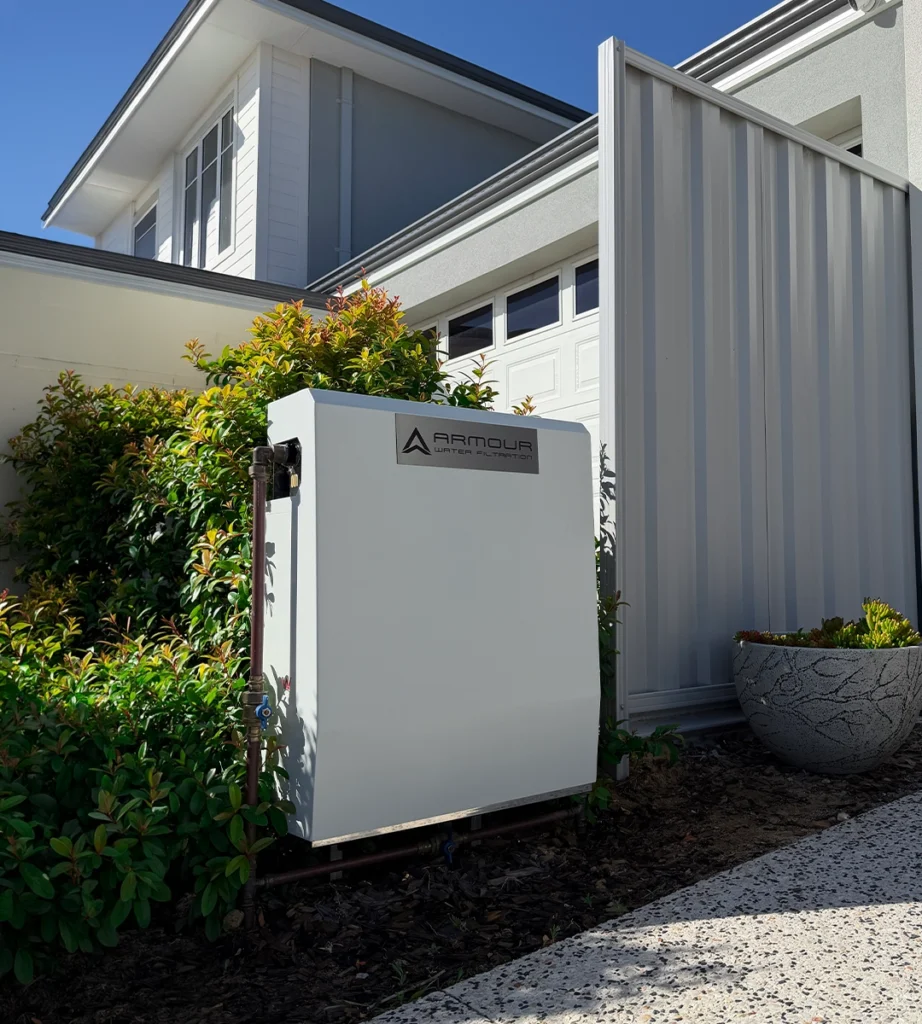
Whole house systems are installed at the mains entry point by our licensed technicians and sized to maintain full water flow throughout the property without reducing water pressure. They deliver safe drinking water and bathing water at every outlet, with suspended solids and sediment also captured by the pre filter stage before reaching any household tap.
Reverse Osmosis for Comprehensive Drinking Water Purification
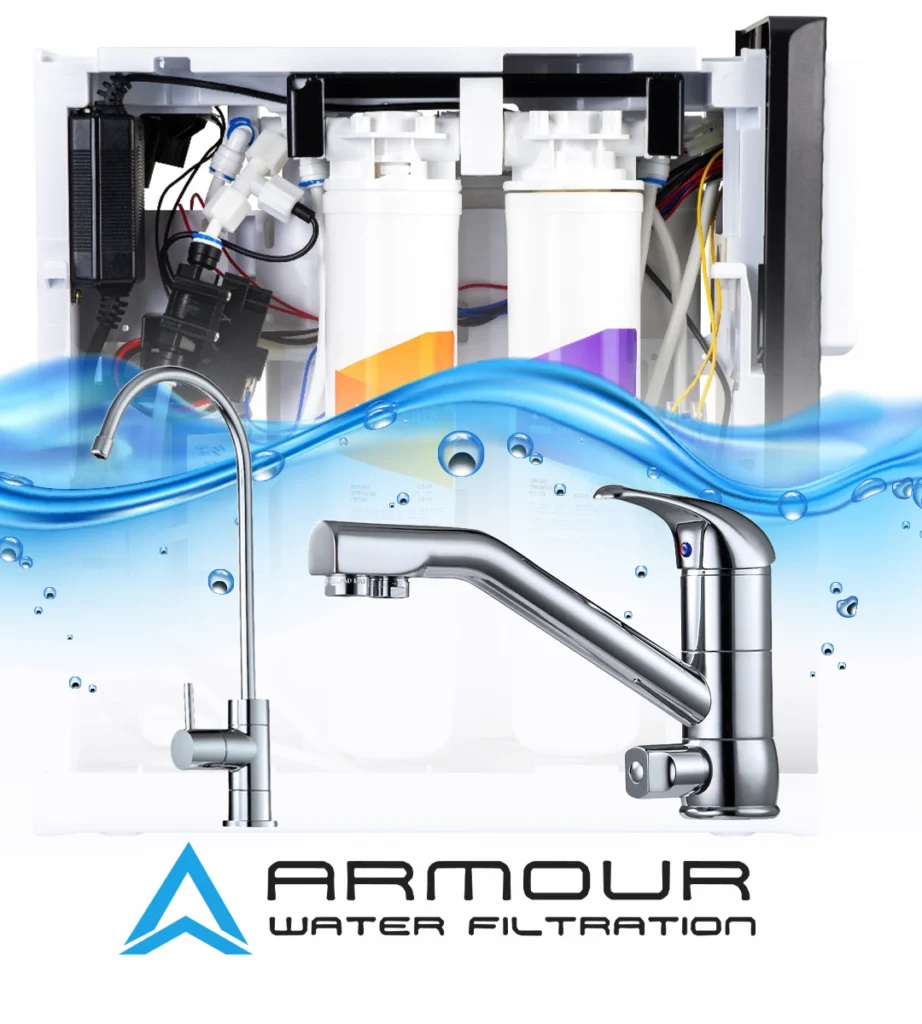
If your concern about contaminated drinking water extends beyond chlorine to dissolved contaminants, including fluoride, naturally occurring heavy metals, nitrates, or PFAS chemicals, a reverse osmosis under sink system is the most comprehensive residential water treatment solution available. The carbon pre filter stage in a multi stage RO system removes chlorine and chloramines before the water reaches the membrane, while the RO membrane itself removes dissolved contaminants to a very low level, producing genuinely pure water for drinking and cooking.
For Melbourne and Perth households concerned about both chlorine taste and the broader health risk profile of their drinking water, a reverse osmosis system provides safe drinking water confidence that goes well beyond what chlorine removal alone delivers. The Australian drinking water guidelines set the benchmark for safe drinking water quality. A well maintained reverse osmosis system consistently exceeds those standards at the point of use, giving your household pure water that is better than safe to drink by every measure.
If you are ready to remove chlorine from your household water supplies and enjoy genuinely better drinking water, contact the Armour Water team today. We will recommend the right solution for your home, your water conditions, and your budget.
Book Your Professional Water Quality Test Today
Concerned about chlorine, hard water, heavy metals, PFAS, bore water contamination, or bacteria in your drinking water? The first step to safer, cleaner water is a professional home water test. Our experts analyse your water supply and recommend the right water filtration system for your home. Discover exactly what is in your water and get clear advice on whole house filters, reverse osmosis systems, or under sink water filters designed for Australian conditions.

Professional service, clear advice, and a filtration system that delivers consistent results. A smart upgrade for any household concerned about water quality.
Frequently Asked Questions About Chlorine in Water
Yes, at the concentrations used in Australian municipal water treatment, chlorine in tap water is considered safe to drink by the relevant health authorities. The Australian drinking water guidelines set a maximum acceptable chlorine concentration of 5 milligrams per litre, and Australian water utilities typically maintain residual levels in distributed water supplies that are significantly below this. These guidelines are set by the National Health and Medical Research Council and represent the national standard for safe drinking water in Australia.
The main concerns associated with chlorine in drinking water relate to disinfection byproducts (DBPs) formed when chlorine reacts with naturally occurring organic matter in surface water sources. These byproducts, called trihalomethanes, are also regulated under the Australian drinking water guidelines and are maintained well within safe limits in treated water supplies. For people with specific sensitivities or health conditions, or for households that simply prefer to remove chlorine for taste reasons, a high quality carbon block filter provides effective filtration without any health risks. Our team can help you identify the most appropriate filtration solution for your specific water quality situation.
The chlorine smell and taste you notice in your drinking water are caused by residual disinfectant that remains in the water systems after treatment. This residual chlorine is intentional and necessary. Without it, bacteria and other microorganisms could grow in the water pipes between the treatment plant and your tap, creating a genuine health risk of contaminated drinking water reaching households.
The intensity of the chlorine taste and smell at your tap depends on several factors. Homes further from water treatment plants tend to have higher residual chlorine concentrations in the delivered supply because more chlorine is added to maintain adequate disinfection over long distances through water pipes. Seasonal changes in source water quality, particularly when surface water from catchments carries higher organic matter loads after rain events, can require higher chlorine dosing to maintain disinfection, resulting in a stronger taste at the tap. Older internal water pipes can also react with chlorine, intensifying the taste. A carbon block filter is by far the most practical and effective way to address chlorine taste and odour in your household water supplies.
Yes, boiling water does remove free chlorine. Chlorine is a volatile compound that evaporates from water when heated to boiling, which is why water that has been boiled and cooled tastes different from straight tap water. However, boiling is not a practical or efficient method for producing chlorine free drinking water for everyday household use. It requires time, energy, and the water must then be stored and cooled before use, which creates its own risk of recontamination if storage conditions are not ideal.
More importantly, boiling does not remove chloramine, which is the disinfectant used in some Australian water supplies, including parts of Melbourne and Perth. Chloramine requires a different removal approach entirely. And boiling concentrates suspended solids and dissolved minerals in the remaining water rather than removing them, which can worsen the water quality in other ways.
An activated carbon block under sink filter removes both chlorine and chloramine continuously and on demand, producing pure water at full mains pressure whenever you need it. It is far more practical than boiling and delivers consistently better results for everyday drinking water and cooking. Our team can help you identify the right carbon or multi stage system for your household.
Yes, and for many households, this is just as important as removing chlorine from drinking water. When you shower in chlorinated water, you absorb chlorine through your skin and inhale chlorine vapour in the warm, enclosed shower environment. For people with sensitive skin, eczema, or respiratory conditions, this exposure can be a genuine health risk and a daily irritant even at concentrations that are considered safe to drink.
There are two practical approaches to addressing chlorine in shower water. The first is a dedicated shower filter, which attaches to the existing shower arm and uses KDF or carbon media to reduce chlorine in the water that flows through the showerhead. These are affordable, easy to install, and effective for single outlet chlorine reduction.
The second, and more comprehensive, approach is a whole house carbon filtration system installed at the main entry point. This addresses chlorine across every outlet in the property, including all showers, baths, and taps, removing the health risk from chlorine exposure throughout the whole home. For Melbourne and Perth households where contaminated drinking water concerns and shower sensitivity both apply, a whole house system is the most complete solution.
Activated carbon block filtration is consistently the most effective and cost efficient technology for removing chlorine and chloramines from household water supplies. Carbon block media has a very high internal surface area that adsorbs chlorine efficiently as water flows through the filter, and its compressed block format provides longer contact time than granular carbon alternatives, making it significantly more effective for chloramine removal.
For under sink drinking water filtration, a quality NSF certified carbon block filter is the right starting point for most Australian households on a mains supply. If your concerns extend beyond chlorine to fluoride, naturally occurring heavy metals, suspended solids, or dissolved contaminants, a multi stage reverse osmosis system that includes a carbon pre filter stage is the most comprehensive solution. It removes chlorine in the pre filter stage and addresses all other dissolved contaminants through the RO membrane, producing genuinely pure water that exceeds safe drinking water standards at the point of use. Armour Water can recommend the right system for your household after a free consultation and, where needed, a professional water test.