
Whole House vs Under Sink Water Filter: Which One Is Right for Your Home?
One of the most common questions we hear from Australian households looking to improve their water quality is: Should I get a whole house water filter or an under sink system? It is a genuinely good question, and the honest answer is that the right choice depends entirely on what you want filtered, where you want it filtered, and what your household actually needs.
Both types of systems are highly effective when matched correctly to the household they serve. POE systems (point of entry or whole house) treat all water entering your property before it reaches any tap or appliance. Sink systems (point of use) focus their filtration power at a single outlet, usually the kitchen sink. Each approach has clear advantages and specific situations where it shines.
In this guide, we break down the key differences so you can make an informed decision on which filtration type best suits your home, family, and water quality goals.
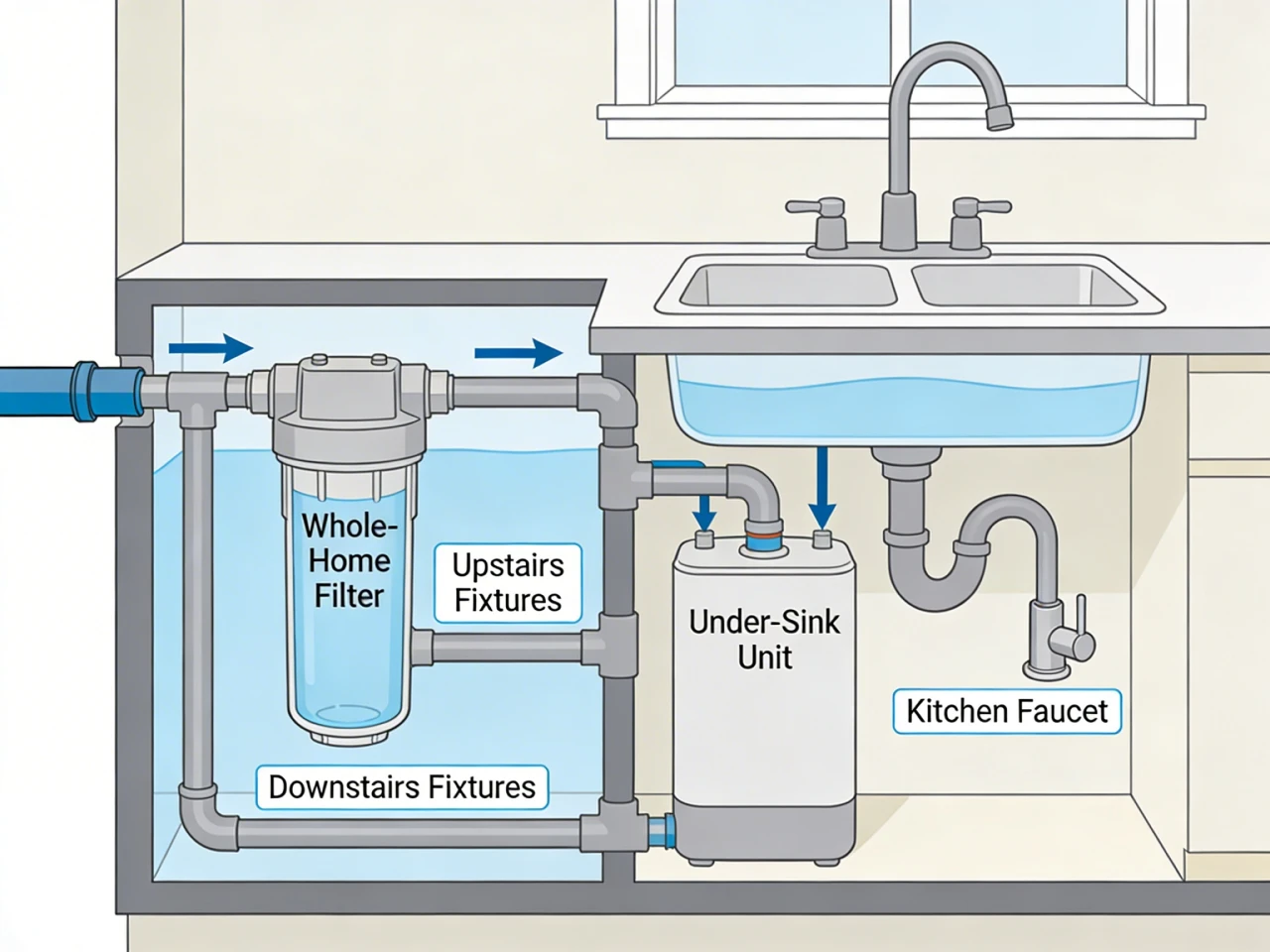
What Is the Core Difference Between POE and wpoint of use Water filters?
The fundamental difference comes down to where the filtration happens and how much of your home’s water supply it covers.
A whole house water filter is installed at the mains entry point of your property. Every drop of water that enters your home, whether it ends up at the bathroom tap, shower, laundry, or kitchen sink, passes through the system before reaching any outlet. These POE systems are about broad, whole property water quality improvement. They protect your home’s water supply comprehensively, from the pipes in your walls to every appliance connected to them.
A sink water filter, by contrast, is installed directly under your kitchen sink and only treats the water that flows through that single outlet. Sink systems are point of use solutions designed to deliver premium quality drinking and cooking water from a dedicated kitchen tap or a filtered tap. They do not affect water quality anywhere else in the home, but what they deliver at that single point can be exceptional, particularly when reverse osmosis technology is used.
Better Water Starts Here
Whole House Water Filters: What They Do Best
Protecting Your Entire Home's Water Quality
The standout advantage of house systems is their reach. When you install a whole house water filter, you improve water quality at every outlet on the property. Your showers deliver clean water free from chlorine and sediment. Your washing machine uses filtered water that is gentler on fabrics. Your dishwasher and hot water unit are protected from the mineral deposits and sediment that cause scale build up and premature wear.
For families with members who have sensitive skin, eczema, or respiratory sensitivities, removing chlorine from shower water with a whole house water filter can make a significant, immediate difference in daily comfort. This is something a sink water filter simply cannot provide, because it only treats water at the kitchen tap.
Heavy Metals, Sediment, and Water Softening at the Entry Point
Quality house filters are designed to address the contaminants most found in Australian mains and tank water supplies. Sediment, chlorine, heavy metals including lead and copper, and the taste and odour compounds introduced by municipal treatment are all captured before water reaches your household outlets.
Many whole house systems also include a water softening stage that conditions calcium and magnesium minerals to prevent scale build up in pipes, appliances, and hot water systems. In hard water areas of Australia, water softening at the point of entry is one of the most practical and cost saving investments a homeowner can make. You cannot achieve this with a sink water filter, no matter how advanced it is.
POE Systems and Their Limitations
Where POE systems fall short is in the depth of filtration they can deliver for drinking and cooking water, specifically. A whole house water filter typically uses sediment and carbon media that effectively remove a broad range of contaminants, but it does not match the precision of a reverse osmosis membrane for dissolved substances like fluoride, nitrates, arsenic, and PFAS.
If the absolute purity of your drinking water is the primary goal, a whole house water filter alone may not be sufficient. This is where many households choose to combine both types of system, using a whole home setup for general protection and adding an under sink reverse osmosis unit for premium drinking and cooking water quality at the kitchen sink.
Under Sink Water Filters: What They Do Best
Precision Filtration for Drinking and Cooking Water
The defining strength of sink filters is the depth of filtration they can achieve for drinking and cooking water. A quality under sink reverse osmosis system uses a semi permeable membrane to remove up to 99 per cent of dissolved contaminants, including fluoride, heavy metals, nitrates, PFAS chemicals, and microplastics. This level of water quality is simply not achievable with a whole house carbon based system, making sink systems the gold standard for households with specific drinking water purity goals.
The filtered water produced by a reverse osmosis under sink unit is delivered through a dedicated kitchen tap that sits alongside your standard tap on the sink or bench. This means you always know which outlet delivers your purified drinking and cooking water and which delivers the standard household supply. The taste improvement from reverse osmosis filtered water is something most households notice immediately.
Cost, Convenience, and Flexibility
Under sink sink filters are considerably more affordable to purchase and install than whole house systems. For households in apartments, rentals, or smaller properties where whole home installation is impractical or not permitted, a sink water filter is often the only viable option. These systems fit neatly inside a standard kitchen cabinet, connect to the existing cold water line, and can often be installed in a single visit with minimal disruption.
For renters or households on a tighter budget, the lower entry cost of a quality under sink point of use water system makes it accessible without compromising the quality of drinking water. The ongoing filter maintenance costs are manageable, and replacement cartridges are straightforward to source and install.
The Limitation of Sink Systems
The clear limitation of sink filters is that they only treat tap water at one point. Your shower water remains untreated. Your laundry uses unfiltered water. Your home’s plumbing and appliances remain exposed to whatever is in your mains supply. For households where heavy metals, chlorine exposure through showers, or scale damage to appliances are real concerns, a sink water filter alone does not address the full picture.
How to Choose Between a Whole House Water Filter and an Under Sink System
The decision between house filters and sink systems comes down to a few key questions about your household and your water quality priorities.
If your primary concern is the taste and purity of your drinking water and you are not particularly concerned about shower water or appliance protection, a high quality under sink reverse osmosis water filter will deliver outstanding results at a fraction of the cost of a whole home system. This is the right choice for renters, apartment dwellers, or smaller households focused exclusively on drinking and cooking water quality.
If you want clean water at every outlet in your home, including the shower, laundry, and all appliances, and you own your property and are willing to invest in a more comprehensive solution, a whole house water filter is the right direction. It protects your home’s water supply holistically, addresses heavy metals and sediment at the entry point, and can include water softening for hard water areas. These POE systems offer the most comprehensive water quality solution available for a residential property.
Many Australian households choose to install both. A whole house system setup for general water quality improvement, combined with a reverse osmosis under sink unit for premium kitchen tap drinking water, gives you the best of both approaches. The whole home system handles sediment, heavy metals, and chlorine across the property, and the RO unit delivers the purest possible filtered water for drinking and cooking at the kitchen sink.
If you are unsure which approach is right for your situation, the smartest first step is always a water test. Understanding what is in your tap water gives you a concrete basis for choosing the most effective point of use water or whole home filtration solution. Our team at Armour Water is happy to discuss your needs, test your water, and help you find the right fit. Reach out today for a free consultation.
Frequently Asked Questions: Whole House vs Under Sink Water Filters
Absolutely, and this is the approach we recommend most often to Australian families who want comprehensive water quality improvement throughout their home. Combining POE systems with a point of use reverse osmosis unit gives you the advantages of both technologies working together. The whole house water filter handles broad spectrum filtration, removing sediment, heavy metals, chlorine, and scale causing minerals from every outlet on the property. This means your shower water is cleaner, your appliances are protected, and your home's plumbing benefits from reduced corrosion and sediment exposure.
The under sink reverse osmosis unit then takes the already improved water from the whole home system and refines it further to produce the purest possible drinking and cooking water at the kitchen tap. Because the whole home pre filtration has already removed sediment and chlorine that would otherwise wear down the RO membrane faster, the combined approach also extends the service life of your under sink system's most expensive component. It is a genuinely synergistic combination that delivers clean water and filtered water at a whole new standard throughout the home. Our Armour Water team can design and install both systems in a single visit.
Both house filters and sink filters can address heavy metals, but they do so in different ways and to varying degrees of effectiveness. Whole house systems with KDF media stages are specifically designed to reduce heavy metals, including lead, copper, mercury, and iron, at the point of entry. This means that every outlet in your home, including your shower and laundry, benefits from reduced exposure to heavy metals. For households where lead pipes or corroded copper plumbing are a concern, addressing heavy metals at the whole home level is clearly the more comprehensive approach.
For the highest possible removal rates, specifically in your drinking water and drinking and cooking water, a sink water filter with reverse osmosis technology is the most effective option. RO membranes remove dissolved heavy metals at a molecular level, achieving removal rates of up to 99 percent for lead, arsenic, chromium, and similar contaminants. If heavy metal contamination in your tap water is a serious concern identified by a water test, combining both system types provides the most robust protection at both the property level and where you actually consume your water.
For most apartment and rental situations, a whole house water filter is not a practical option. POE systems require installation at the property's mains entry, which in a multi unit building or rental context typically means shared or landlord controlled infrastructure that is not accessible for individual tenant modification. Most renters and apartment dwellers are therefore better served by a quality under sink point of use water system that connects within their own kitchen cabinet and can be removed when they move.
The good news is that a quality sink water filter, particularly one with reverse osmosis technology, delivers exceptional clean water for drinking and cooking water that is genuinely satisfying for most households. The limitation is that shower water and tap water at other outlets in the property remain unfiltered, and appliances continue to use the standard mains supply. For renters with specific skin sensitivities or concerns about chlorine in shower water, a dedicated shower filter is a practical workaround that does not require any whole home plumbing modification. Our team can advise on the best combination of solutions for your rental situation and water quality goals.
Maintenance requirements differ between house systems and sink systems, both in frequency and cost. Whole house filters typically use larger capacity cartridges that last six to twelve months, depending on your household's water usage and the quality of your incoming supply. Because the cartridges are larger, they generally cost more per unit but are replaced less frequently, keeping annual maintenance costs relatively manageable.
Under sink sink filters, particularly reverse osmosis systems, have multiple filter stages with their own replacement schedules. Pre filter cartridges typically need to be changed every 6 to 12 months, while the RO membrane itself lasts 2 to 3 years. The per cartridge cost is lower than whole home cartridges, but the multiple stages mean there is more to keep track of. The total annual maintenance cost for a quality under sink point of use water system is generally comparable to, or slightly lower than, that of a whole home system, though this varies by brand and system configuration. Both types of house water filter investments pay for themselves relatively quickly when you factor in the elimination of bottled water purchases and, for whole home systems, reduced appliance maintenance costs. We provide every customer with a clear service schedule and reminder service to make maintenance easy.
If the taste of your drinking water at the kitchen sink is your primary concern, a reverse osmosis under sink system will almost always win this comparison. The RO process removes dissolved minerals, salts, chlorine, and organic compounds to a level of precision that yields water with a clean, neutral taste, as many people describe it, noticeably purer than standard filtered tap water. The post carbon polishing stage that follows the membrane in most sink systems provides a final refinement, eliminating any residual taste or odour.
Whole house filters also improve taste significantly by removing chlorine, sediment, and organic compounds from your home's water supply. Most households notice a clear and positive improvement in how their tap water tastes after a whole home system is installed. However, because whole house systems do not typically include an RO membrane, they do not achieve the same level of dissolved contaminant removal as a dedicated under sink reverse osmosis unit. If you want the cleanest tasting drinking water possible from your kitchen tap, pairing a whole home system with an RO unit at the sink is the ultimate combination. The whole home pre filtration makes the RO's job easier and extends its service life, while the RO delivers premium filtered water for all your drinking and cooking needs.