
Hard Water
Tired of scale buildup and dry skin caused by hard water? Our hard water treatment systems reduce calcium and magnesium to protect your plumbing appliances and hot water system. Enjoy softer water better showers and longer lasting appliances with a solution designed for your home.
Hard Water Filter: How to Tackle Limescale, Protect Your Appliances, and Improve Your Home Water Quality
If you have noticed white chalky deposits on your taps, showerheads, kettle, and tiles, that is hard water at work. Hard water is one of the most common water quality challenges faced by Australian households, and while it is not a health concern like chemical contamination, its practical effects on your home, appliances, and skin and hair are real and accumulate over time.
This guide explains what hard water is, how it affects the water in your home, and the most effective ways to address it with the right hard water filter or treatment system. Whether you are in Perth, Melbourne, or anywhere else across Australia where hard water is a known issue, there is a practical, affordable solution for your household.

What Is Hard Water and Why Does It Matter?
Ultraviolet disinfection is the most effective, chemical free method for inactivating bacteria, viruses, and protozoa in household water supplies. UV light at 254 nanometres damages the DNA of microorganisms, preventing them from reproducing and rendering them harmless. Unlike chlorine disinfection, UV disinfection leaves no chemical residue, does not affect taste or odour, and does not form disinfection byproducts (DBPs), which are a concern with chemical treatment methods.
A UV water purification unit installed in your home’s water treatment system exposes every litre of water passing through to a precisely calibrated dose of UV light delivered by a germicidal lamp. The effectiveness of UV treatment in removing or inactivating pathogens at the correct dose is 99.99 per cent or higher for bacteria and protozoa, and very high for most viruses. This level of light disinfection is equivalent to or exceeds the microbiological protection provided by chemical disinfection at typical municipal dosing levels, without the associated chemical concerns.
It is important to note that UV systems are only effective on clear water. Turbidity, iron, tannins, or any particles that absorb or scatter ultraviolet light in the water pathway significantly reduce the effectiveness of removing pathogens. This is why UV treatment should always be installed as the final stage of a multi stage water filtration system that includes sediment and carbon pre filtration upstream. In home water applications, particularly, pre treatment to remove iron and sediment is essential before the water reaches the UV systems stage.
UV Disinfection: How It Works and Why It Is the Best Choice for Microbiological Treatment
Hard water is simply water that contains high levels of dissolved minerals, primarily calcium and magnesium, picked up as the water passes through rocks and soil before entering the water supply. The minerals in hard water are not harmful to drink in the concentrations typically found in Australian municipal supplies. In fact, the body uses calcium and magnesium for bone health and other functions. The problem with high levels of dissolved minerals in household water is entirely practical.
When hard water is heated or evaporates, the minerals in hard water precipitate out of solution and form mineral deposits, the white chalky scale you see on taps, inside kettles, on showerheads, and around bathroom fixtures. Over time, this scale builds up inside hot water systems, water heaters, pipes, and appliances, reducing their efficiency, increasing energy consumption, and shortening their useful lives.
Perth is particularly well known for hard water, with much of the city drawing from groundwater field systems that carry elevated levels of calcium and magnesium. Parts of Melbourne’s outer suburbs also experience harder water depending on the water source feeding their area. Hard water is a water quality issue that affects millions of Australian households, and addressing it with the right water filtration system or treatment approach can make a noticeable difference to daily life.
The Real World Effects of Hard Water in Your Home
Limescale on Fixtures and Surfaces
The most visible sign of hard water is the white, crusty scale that builds up on plumbing fixtures, taps, showerheads, and tiles. This limescale forms when the minerals in hard water precipitate out during evaporation, leaving deposits on every surface the water touches. It is stubborn to clean, returns quickly, and, over time, can permanently stain and damage fixtures, tiles, and plumbing throughout the bathroom and kitchen.
Damage to Appliances and Water Heaters
Inside your home’s appliances and plumbing, the effects of high levels of dissolved minerals are even more serious. Scale builds up inside water heaters and hot water systems, forming an insulating layer on heating elements that forces the system to work harder to heat the same volume of water. This raises energy consumption and accelerates wear on the heating element and tank. Over time, unaddressed scale build up in water heaters leads to premature failure, costing significantly more in replacement and repair costs than a hard water filter system ever would.
Your washing machine is another casualty of hard water. Mineral scale accumulates in the drum, hoses, and heating element of a washing machine over time, reducing washing performance and shortening the appliance’s lifespan. Dishwashers face the same challenge: scale buildup reduces cleaning effectiveness, leaving glassware and cutlery with a white, cloudy film that is difficult to remove.
Effects on Skin, Hair, and Soap Lather
Hard water affects more than just your fixtures and appliances. It affects your body too. When you shower in hard water, calcium and magnesium minerals react with soap and detergent, forming soap scum rather than the rich lather you get in soft water. This means soap and detergent perform less effectively, you use more product to achieve the same result, and residual soap scum is left on your skin and hair after rinsing.
For many people, the effects of regular hard water showering on skin and hair are noticeable. Skin can feel dry and tight after showering because the mineral film left behind disrupts the skin’s natural moisture barrier. Hair can become dull, brittle, and difficult to manage over time. For people with eczema or sensitive skin conditions, hard water can actively trigger or worsen flare ups. Addressing the minerals in hard water in your water in your home can produce surprisingly significant improvements to skin and hair health, which many households only fully appreciate after installing a treatment system.
Hard water also makes laundry less effective. When soap and detergent react with the high levels of dissolved minerals in hard water, insoluble compounds form that reduce cleaning power, leave clothes feeling stiff and grey over repeated washing cycles, and require higher temperatures to achieve the same results as soft water at lower temperatures.
Hard Water Filter Options: What Actually Works
Water Conditioners and Template Assisted Crystallisation
For households looking to address limescale and protect appliances without salt or chemicals, water conditioners using template assisted crystallisation (TAC) technology are a popular salt free option. These water conditioners work by converting dissolved calcium and magnesium into microscopic crystals that remain suspended in the water rather than adhering to surfaces. The minerals in hard water are still present, but they no longer stick to pipes, fixtures, or heating elements. TAC based water conditioners require no salt, no electricity, and no backwash cycle. They are installed at the mains entry point and work continuously, treating water flowing through the system before it reaches any household outlet. They are the most environmentally friendly hard water treatment approach available and are well suited to households that want scale prevention without the ongoing salt cost of a traditional ion exchange softener.
Ion Exchange Water Softeners for Effective Hard Water Removal
Traditional salt based ion exchange water softeners are the most comprehensive solution for high levels of dissolved minerals in household water. These systems replace calcium and magnesium ions in the water in your home with sodium ions through a resin bed, producing genuinely soft water at every outlet. The softened water doesn’t form scale on surfaces or inside appliances, lathers effectively with minimal soap and detergent, and dramatically improves the shower and bathing experience. Ion exchange softeners require periodic regeneration with salt, which replaces the sodium on the resin bed and flushes the accumulated calcium and magnesium to drain. These systems are typically installed at the mains entry point in a 20 × 4.5 or larger tank format for whole of home treatment. Maintenance involves topping up the salt reservoir every few weeks, depending on water hardness and household usage. For Perth households dealing with genuinely hard water, an ion exchange softener often delivers the most complete and immediately noticeable improvement to water in your home.
Whole House Carbon and Multi Stage Filtration Systems
A whole house water filtration system with an appropriate media stage for hardness treatment addresses both limescale and other water quality concerns, including chlorine, sediment, and heavy metals, simultaneously. These filtration system setups are installed at the mains entry point using either standard 20 × 4.5 or 20 × 4.5 inch housings, depending on flow rate requirements, and can be customised with the right combination of media for the specific water conditions entering your property. For Melbourne and Perth households where chlorine taste, sediment, and hardness are all concerns, a multi stage water filtration system addresses all of them in a single installation. Water flowing through the system is treated sequentially, with each stage targeting different contaminants and conditions before it reaches every tap and appliance in the home.
Book Your Professional Water Quality Test Today!
Concerned about chlorine, hard water, heavy metals, PFAS, other water contamination, or bacteria in your drinking water? The first step to safer, cleaner water is a professional home water test. Our experts analyse your water supply and recommend the right water filtration system for your home. Discover exactly what is in your water and get clear advice on whole house filters, reverse osmosis systems, or under sink water filters designed for Australian conditions.
Choosing the Right Hard Water Solution for Your Australian Home
The right hard water treatment approach depends on several factors: how hard your water is, whether you want to retain or remove minerals in the treated water, your household’s environmental priorities around salt use, and your budget for both upfront installation and ongoing maintenance.
The most reliable starting point is a professional water test that tells you the exact hardness level of the water in your home, measured in milligrams per litre of calcium carbonate. This number indicates whether a simple scale prevention conditioner will suffice or whether a full ion exchange softener is warranted. Our team at Armour Water can organise this test for your property and use the results to recommend the most appropriate and cost effective filtration system for your specific water conditions.
We supply, install, and service a comprehensive range of hard water treatment solutions for Australian homes, from salt free water conditioners to whole house carbon water filtration systems with integrated softening stages. Our customer service team is available to discuss your situation, answer your questions, and help you find the solution that genuinely fits your home and household. Contact our team today for a water consultation and put an end to the limescale, appliance wear, and tap water quality issues caused by hard water.
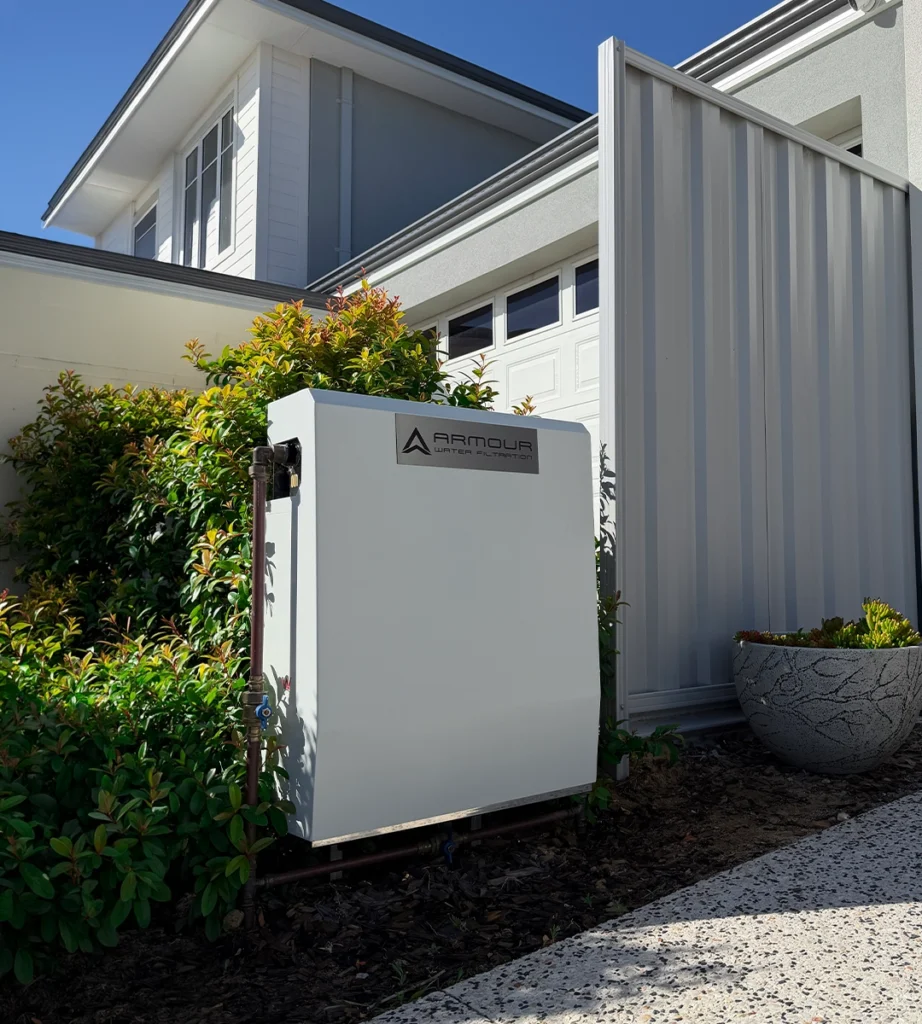

Professional service, clear advice, and a filtration system that delivers consistent results. A smart upgrade for any household concerned about water quality.
Frequently Asked Questions About Hard Water Filters
Hard water is tapping water that contains high levels of dissolved minerals, primarily calcium and magnesium, picked up as rainwater passes through limestone, chalk, and other mineral rich rock formations before entering the water supply. The minerals in hard water are not harmful to health at the concentrations found in Australian municipal supplies. The issue is their practical effect on your home.
The most obvious signs that you have hard water are white chalky mineral deposits on taps, showerheads, and tiles, a filmy or cloudy residue on glassware and cutlery after dishwasher cycles, poor lather from soap and detergent, and skin and hair that feel dry or dull after showering. You may also notice reduced efficiency in your kettle, hot water system, or washing machine as scale builds up over time.
The most accurate way to confirm water hardness and its level is a professional water test that measures the concentration of calcium and magnesium in your supply and provides a hardness rating in milligrams per litre. Armour Water offers professional water testing for Australian households and can arrange testing for your property as part of a free initial consultation. Understanding exactly how hard your water is at home allows us to recommend the right treatment system for your specific situation, from a simple scale conditioner to a comprehensive water filtration system with integrated softening.
This is one of the frequently asked questions we hear from Australian households dealing with hard water, and it is worth clarifying because the two terms are sometimes used interchangeably when they describe different approaches.
A water softener, typically an ion exchange system, removes the calcium and magnesium minerals in hard water from the water in your home by replacing them with sodium ions. The result is genuinely soft water that doesn’t form scale, lathers readily with minimal soap and detergent, and is noticeably gentler on skin and hair. These systems require regular salt top up and a regeneration cycle.
A hard water filter, by contrast, is a more general term that can describe various systems designed to address the effects of hard water without necessarily removing the minerals. Water conditioners using TAC technology, for example, modify the form of the calcium and magnesium so they remain in suspension rather than adhering to surfaces, preventing scale build up without removing the minerals in hard water from the water itself. Multi stage filtration systems can combine scale prevention with other water quality improvements. The right choice depends on your specific water quality concerns and household priorities.
For many Australian households dealing with hard water, the improvement in skin and hair after installing a hard water filter or softener is one of the most immediately noticeable and consistent benefits. The high levels of dissolved minerals in hard water interfere with the effectiveness of soap and detergent and leave a mineral film on the skin and scalp after rinsing. This film disrupts the skin's natural moisture barrier, contributing to dryness, tightness, and, in susceptible individuals, eczema flare ups and other skin irritation.
When you shower and bathe in treated water with reduced mineral content, soap and detergent lather more effectively, rinse more completely, and leave less residue. Skin and hair retain more of their natural moisture, and the overall showering experience feels noticeably softer and more comfortable. Hair typically becomes easier to manage, shinier, and less prone to breakage over time. For households in Perth, where water hardness is particularly high due to groundwater fed supplies in many suburbs, the skin and hair benefits of treating hard water at home are among the most valued outcomes reported by our customers. Our customer service team hears this feedback regularly.
Among the frequently asked questions we receive about hard water treatment, appliance protection is one of the most financially important considerations for Australian homeowners. The minerals in hard water deposit as scale inside any appliance that heats or evaporates water. Water heaters and hot water systems are particularly vulnerable, as scale builds up on heating elements and inside tank walls, forming an insulating layer that forces the system to work harder and use more energy to heat the same volume of water. Over time, this accelerates wear and contributes to premature failure.
The same process affects dishwashers, washing machine drums and hoses, coffee machines, kettles, and any other appliance that regularly heats or holds water. Mineral deposits reduce cleaning performance, restrict water flowing through hoses and spray arms, and create additional stress on moving parts. An effective hard water filter or water conditioner system prevents scale formation throughout your home’s plumbing system, protecting every connected appliance and extending their service life. The long term savings from appliance replacement and repair costs make the investment in a high quality water filtration system genuinely worthwhile for most households in hard water regions.
Among the frequently asked questions we receive about system sizing, this is one that genuinely depends on your property. Whole house hard water treatment systems are sized based on your household's peak daily water demand and the flow rate required at the mains entry point. A typical Australian home with two to three bathrooms and four occupants needs a system rated to handle the peak simultaneous demand of multiple outlets running at the same time without a noticeable drop in pressure.
Standard whole house housing formats include the common 20 × 4.5 inch big blue housing that handles higher flow rates appropriate for full family homes. Smaller households may be adequately served by standard 10 inch or 20 inch slim housings. For ion exchange softeners, the resin tank is sized based on daily water usage and the hardness level of your incoming supply, with larger households in very hard water areas requiring larger tanks and more frequent regeneration cycles.
Our Armour Water team sizes every system based on a thorough assessment of your property, household size, and incoming water quality data. We never recommend a system that is undersized for your needs or oversized in a way that adds unnecessary cost. The filtration system we install will be perfectly matched to your home's requirements, correctly installed by our licensed team, and backed by our full after sales customer service and maintenance support.